
We understand — cats in your yard can be frustrating.
Digging in gardens.
Spraying.
Hunting birds.
Showing up on your camera at 2 AM like they own the place.
This page explains what’s actually happening…what works (and what doesn’t), what your options are and hopefully how to co-exist in a way that works for you and the cats.
Community Cats
The Outdoor Cats in Your Neighborhood
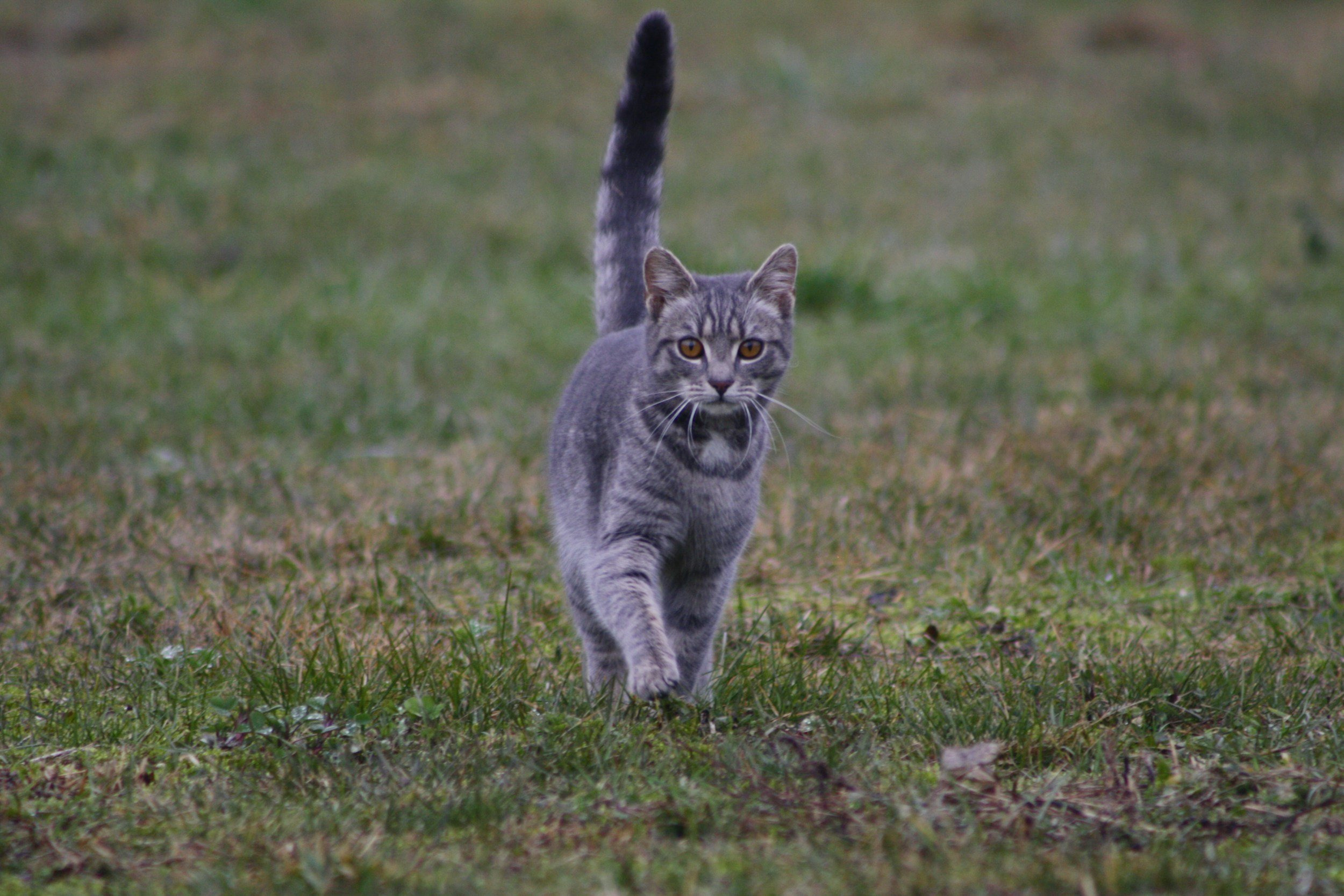
Stray …Feral…or Indoor/Outdoor?
They are different & why it matters.
Determining whether a cat is stray or feral is essential because it directly affects what help and options are available. A simple way to assess this—especially before trapping—is to consider your interactions with the cat: have you been able to approach, pet, or handle it? Cats that allow proximity, vocalize, or seek attention are typically stray cats and may be lost or abandoned pets who need assistance. In contrast, a cat that runs immediately upon seeing a person, avoids all contact, and cannot be safely handled is likely feral and living independently outdoors. Companion Animal Control accepts stray cats from contracted municipalities that include cat services; however, we do not accept feral cats.
Important Note: Behavior is not always black and white. Some community cats may show familiarity with a caregiver, but this does not mean they are suited for indoor living.
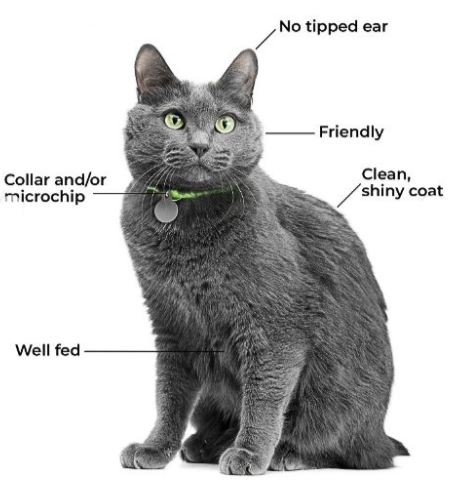
Indoor/Outdoor Cat
Friendly and comfortable around people
May approach homes, doors, or vehicles
Often well-fed with a clean, shiny coat
May have a collar and/or microchip
Active during the same times of day
Generally no eartip (clipped ear)
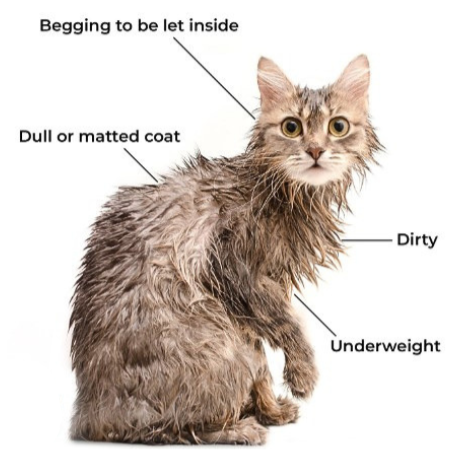
Stray /Lost Cat
Previously socialized to people but may be cautious or timid
May approach people or linger near homes
Typically lives alone (not with other cats)
May appear dirty, thin, or unkempt
May meow or respond to voices
Behavior can vary depending on stress and environment
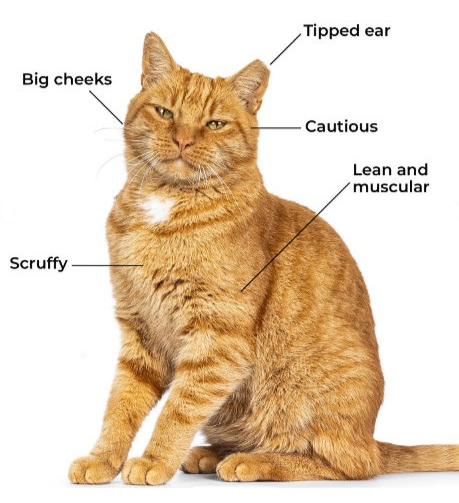
Feral (Community) Cat
Not socialized to people; avoids humans
Will not approach and will seek hiding places
Often part of a colony of cats
Moves low to the ground, avoids eye contact
Silent—does not meow or seek attention
Often active at night
May have an eartip if part of a TNR program
Cannot be handled or touched
“I don’t want cats in my yard.”
We understand, but there’s a reason why simply removing the cats doesn’t solve the problem. The “Vacuum Effect” actually means, you’ll make the problem worse.
It seems logical, right…remove the cats → problem solved.
In reality, the opposite usually happens.
Outdoor cat populations are driven by food and territory. When cats are removed from an area that still has resources so new, and often more, cats will simply move into this area. For example, if a colony has 5 cats and 3 are removed, the remaining cats now have more food and territory. Females often produce larger litters, and new cats move into the open space. Within a short time, there are as many or more cats than before. This is well-documented by national organizations and effective population reduction only occurs when a high percentage of cats in an area are sterilized and returned (TNR).
If you don’t want cats on your property, humane deterrents are the most effective solution. Removing cats rarely works long-term due to the vacuum effect.
Humane deterrents that work:
Motion-activated sprinklers
Motion lights or ultrasonic deterrents
Garden fencing or “cat-roller” fence toppers
Commercial scent repellents
Removing food sources (bird seed, pet food, garbage access)
Blocking access under decks/sheds
Cats choose areas with food, shelter, or prey.
If those disappear, they usually move on.


Important: Do Not Trap a Cat Until You Have a Plan
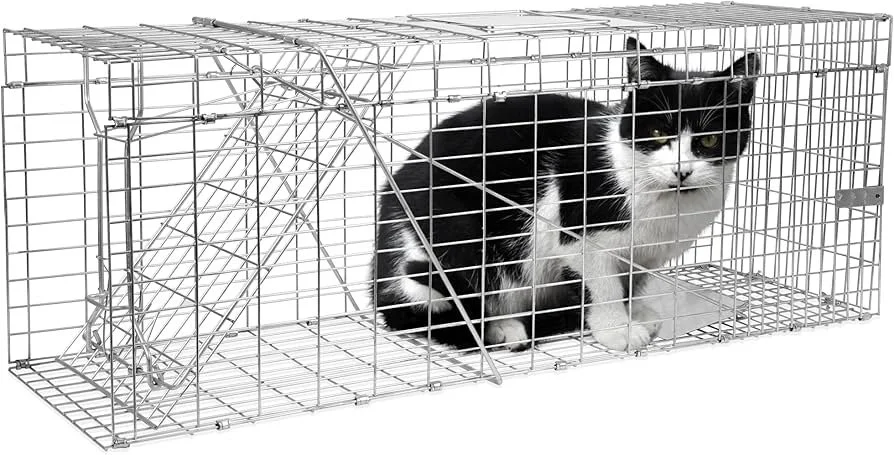
We frequently receive calls after someone has already trapped a cat.
If the cat is feral, there is often nowhere for it to go — during this time continued confinement is stressful and unsafe for the cat. So it is important to have a plan as it is inhumane and potentially animal neglect to leave a cat in a live trap for more than 12 hours. If you trap a cat, you are responsible for finding a humane outcome for that cat. However—keep in mind, the cat you have trapped could be owned by someone and is therefore property.
So before trapping, determine:
Is this cat a cat likely owned by someone and lost OR is this a feral cat?
If this is a feral Is there a rescue or TNR option available?
Does your municipality provide cat services?
If you already have a cat in a trap, move the trap to a shaded area out of the wind and rain. Placing a towel over the trap to create a dark space will often settle a scared cat. If the cat cannot be handled, it is likely feral and CAC will not intake it.
When Confined (Trap/Shelter)
Indoor/Outdoor or Stray: May appear fearful or defensive but can warm up
Feral (Community): Remains highly stressed, avoidant, and untouchable
Frequently Asked Questions
-
If your city does not include cats within its animal control services, residents may wish to follow up with their city council or municipal administration for clarification. Companion Animal Care & Control (CACC) operates under service contracts with municipalities, and the scope of animal control services—including whether cats are included—is determined by each city. Some municipalities contract with CACC for full animal control services that include cats, while others may only contract for specific services such as dog enforcement or impound support.
Because of this structure, CACC cannot accept cats from the public if the contracting municipality does not include cats in its service agreement. In those cases, cats cannot be dropped off with us, and any decision to impound an animal rests with the municipality itself. For cities operating under an impound-only contract, it is entirely at the discretion of city officials or law enforcement whether an animal is impounded.
CACC does not intake feral cats. However, we can provide private Trap-Neuter-Return (TNR) services to help manage community cat populations. Requests for municipal TNR services must come directly from a city official or authorized municipal staff member. If residents are interested in seeing these types of programs considered in their community, they may wish to contact their city council or municipal administration to ask whether the city has a cat ordinance, whether cat-related animal control services are included in their contract, and whether community cat management or TNR programs have been considered. City council agendas, meeting schedules, and contact information for elected officials are typically available on municipal websites, and public meetings provide an opportunity for residents to raise questions or share concerns.
-
We do not intake feral cats, pick up trapped feral cats, or provide cat services in municipalities that do not include cats in their animal control scope. Animal control authority and services are determined by each municipality.
-
We accept stray cats (friendly, socialized cats) from municipalities that include cats within their contracted animal control services. We also provide guidance and resources for residents dealing with community cats.
-
We hear this concern often: “Cats are killing birds.” This concern is understandable and valid. Outdoor cats are natural hunters, and unmanaged cat populations can impact local wildlife, particularly small birds and mammals. Because of this, communities often look for ways to reduce the number of free-roaming cats.
However, simply removing cats from an area does not reduce predation in the long term. Outdoor cat populations are driven by the availability of food and territory. When cats are removed but those resources remain, the area quickly becomes available for other cats to move in. This is known as the “vacuum effect.” New cats will occupy the same territory, and the cycle of reproduction and hunting continues.
Research and field experience have shown that the most effective long-term strategy for reducing both cat populations and wildlife impact is stabilizing the population through Trap-Neuter-Return (TNR). When cats are sterilized and returned to their territory, they can no longer reproduce, they roam less, and territorial behavior prevents new unsterilized cats from moving into the area. Over time, the colony gradually declines in number, which reduces overall hunting pressure on wildlife.
For communities concerned about wildlife impacts, the goal is not simply removing individual cats, but preventing the continued growth of outdoor cat populations. Population stabilization through sterilization is the approach most widely supported by animal welfare organizations and community cat management programs.
-
First determine whether the cat is friendly or feral.
If the cat is friendly: follow the steps on our Found Animal page.
If the cat is feral (cannot be handled): release the cat where it was trapped. Do not relocate it — relocation is abandonment and often fatal. Seek TNR resources if available. Companion Animal Control does not intake feral cats.
If the cat is injured: contact a local veterinarian directly. Veterinary surrender is often the fastest humane option for injured feral cats.
-
Research shows the most effective long-term solution is Trap-Neuter-Return (TNR). Sterilized cats do not reproduce, fight less, roam less, and populations gradually decline over time as colonies naturally shrink.
-
While CAC does not operate municipal TNR programs, we can provide private-contract TNR services for properties such as mobile home parks, apartment complexes, commercial sites, HOAs, or campuses. Leadership for these areas can contact us for a quote.
-
A community cat is any unowned outdoor cat. These cats may be feral or friendly and may live alone or in colonies. Many are informally cared for by residents who provide food or shelter.
-
Sterilization is the single most effective way to reduce community cat populations over time. Residents who wish to help can provide consistent food and water, provide weather-appropriate shelter, support or participate in TNR, and seek spay/neuter resources. Over time, sterilized colonies naturally decline in number.
-
One practical way to increase the chances of successfully trapping a feral cat for a scheduled Trap-Neuter-Return (TNR) appointment is to “trap train” the cat ahead of time. Many TNR appointments are scheduled days or weeks in advance, and it can be frustrating to miss the appointment if the cat does not enter the trap on the day you need it.
Trap training helps the cat become comfortable entering the trap so it feels like a normal feeding place rather than something new or threatening.
To trap train, place the humane trap in the area where the cat normally eats and securely zip-tie the trap door open so it cannot close. Begin feeding the cat only inside the trap. Each day, place the food dish farther inside the trap until the cat is walking all the way in to eat. The trap essentially becomes the cat’s regular feeding station, and the cat learns that entering it is safe.
Continue feeding this way until the day before your TNR appointment. At that point, remove or clip the zip tie so the trap door can function normally. When the cat enters the trap to eat, the trap will close and safely contain the cat for transport to the spay/neuter appointment.
This simple preparation greatly increases the likelihood of trapping the correct cat on the scheduled day and helps reduce stress for both the caregiver and the animal.
-
Removing outdoor cats from a neighborhood rarely solves the problem and can actually lead to more cats over time. Free-roaming cat populations are driven by available food and territory. When cats are removed but those resources remain, new cats move into the area to take advantage of them. This is often called the “vacuum effect,” and it means the nuisance behaviors people are trying to solve can quickly return.
A more effective long-term approach is Trap-Neuter-Return (TNR). When cats are humanely trapped, sterilized, and returned to their territory, they continue to occupy that space but are no longer able to reproduce. Over time, the population naturally declines. Sterilization also reduces behaviors that people commonly find problematic, such as fighting, spraying, and roaming.
Because feral cats are not socialized to people and cannot safely be placed into homes, euthanizing healthy feral cats is not considered a humane or effective population control method.
-
Animal Humane Society (Woodbury, Coon Rapids & Golden Valley)
Purple Cat Clinic (Baldwin, WI)
RPAW Animal Wellness Center (Columbus)